Research paper
Dark Patterns and Player Autonomy
Every casino screen steers. Button size, order, defaults and wording all push toward one choice. The question for designers is whether the push helps the player make their own decision or overrides it, and regulators in the US and UK have set out what crosses the line.
In brief
- The FTC's September 2022 staff report, Bringing Dark Patterns to Light, groups practices including disguised ads, hard cancellation, buried terms and fees, and tricks to share data.
- The UK Competition and Markets Authority (CMA)'s April 2022 papers describe online choice architecture as the environment in which people act, and review evidence of harm.
- Since April 2025 the UK's Digital Markets, Competition and Consumers Act lets the CMA fine businesses up to 10% of global turnover for consumer law breaches.
- Gambling rules add specific limits: no prefilled limit amounts in Great Britain, no reverse withdrawals, and Ontario's 24-hour wait before a limit is relaxed.
What regulators mean by dark patterns
The Federal Trade Commission published its staff report Bringing Dark Patterns to Light on September 15, 2022. Its announcement says dark patterns "can obscure, subvert, or impair consumer choice and decision-making" and describes four groups: misleading consumers and disguising ads, making it difficult to cancel subscriptions or charges, burying key terms and junk fees, and tricking consumers into sharing data. One enforcement example it cites involved "a difficult-to-find, lengthy, and confusing cancellation path". See dark pattern in the glossary.
In the UK, the Competition and Markets Authority published a discussion paper and an evidence review on online choice architecture on April 5, 2022. The papers treat choice architecture as "the environment in which people act", including how options are presented and how interfaces are designed, and set out how those choices can harm consumers and competition. See choice architecture in the glossary.
The legal stakes in the UK rose on April 6, 2025, when the unfair commercial practices provisions of the Digital Markets, Competition and Consumers Act 2024 came into force. The CMA's announcement says it "can fine them up to 10% of their global turnover" for consumer law breaches, and that the Act bans "drip pricing", where extra fees are added later in a purchase.
Where gambling interfaces are most exposed
| Choice point | Pattern to avoid | Fairer design |
|---|---|---|
| Setting a limit | A suggested or prefilled amount; "no limit" as the big button | Empty fields; setting a limit as the default path (required in Great Britain) |
| Raising or removing a limit | One-tap removal styled as the main action | A clear explanation of any wait, such as Ontario's 24 hours |
| Withdrawing | Prompts to cancel and keep playing | A plain status screen; reversals are banned in Great Britain |
| Promotions | Key terms behind a link or in small gray text | Key terms next to the offer, in readable type |
| Closing an account | A hard-to-find path with repeated "are you sure" screens | A closing route as easy to find as sign-up |
| Marketing consent | Preticked boxes or confusing double negatives | Unticked boxes with plain wording |
Gambling rules that already ban specific patterns
Some of these choices are not left to judgment. The Gambling Commission's guidance on financial limits says an operator "would not be able to offer a prepopulated and/or 'greyed out' suggestion in the field", and that any field rules must not "nudge customers or anchor their decisions in any material way". The 2021 online games package banned "features that speed up play or give the illusion of control over the outcome", autoplay, and "sounds or imagery which give the illusion of a win when the return is in fact equal to, or below, a stake", and permanently banned reverse withdrawals.
The anchoring effect behind the limit rule has been measured outside the regulator. Research by the Behavioural Insights Team, published by GambleAware in March 2021, found that removing "high monetary anchors" from deposit limit tools led people to set much lower limits. The deposit information paper gives the figure.
Ontario's standards require operators not to relax or remove a limit without a player request, and to wait at least 24 hours before acting on a request to relax one. Interfaces that follow those rules in the letter but bury them in wording, for example by describing a limit increase as an "upgrade", work against the purpose.
Four tests for a fair choice
- Symmetry. Are the options for and against a riskier choice presented with similar size, color and position?
- Information. Are the facts that matter to the decision, such as fees, terms or waiting times, visible at the moment of choice?
- Effort. Is the safer choice at least as easy to make as the riskier one? Is leaving as easy as joining?
- Language. Does the wording describe the choice neutrally, without guilt, urgency or jokes at the player's expense?
These tests are our editorial framework, built from the regulator documents above. They are not a legal standard, and a screen that passes them can still breach a specific rule.
Worked example (invented)
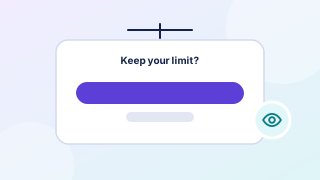
Before: a pop-up after a player reaches their limit says "Hit your limit? Remove it now and keep the fun going" with a large purple button and a small gray "No thanks". After: "You've reached your daily deposit limit of 50. It resets at midnight. You can change your limit in Safer play; increases start after 24 hours." Two buttons of equal size: "OK" and "Go to Safer play".
Questions
Is every nudge a dark pattern?
No. Design always shapes choices. Regulators focus on designs that obscure information, make one option much harder than another or exploit urgency or confusion. Making the safer choice the default, as British limit rules do, is a deliberate and lawful nudge.
Does UK consumer law apply to gambling operators?
Yes. The CMA's earlier online gambling case applied consumer law to bonus terms and withdrawals, and its consumer protection powers under the 2024 Act apply alongside Gambling Commission rules.
How can a team audit its own screens for dark patterns?
Walk through each choice point in the table above and apply the four tests, recording findings with the observation log. Then check the specific gambling rules for each market, because they ban some patterns outright.
Sources
- GambleAware (research by the Behavioural Insights Team), Applying behavioural insights to design better safer gambling tools Part 1: Anchoring, March 2021.
- Federal Trade Commission, Bringing Dark Patterns to Light, September 15, 2022.
- Federal Trade Commission, FTC Report Shows Rise in Sophisticated Dark Patterns Designed to Trick and Trap Consumers, September 15, 2022.
- Competition and Markets Authority, Online Choice Architecture: How digital design can harm competition and consumers, published April 5, 2022.
- Competition and Markets Authority, CMA to boost consumer and business confidence as new consumer protection regime comes into force, published April 7, 2025.
- Gambling Commission, Changes to customer-led tools - financial limits, published October 23, 2025, updated May 26, 2026.
- Gambling Commission, Gambling Commission announces package of changes which make online games safer by design, published February 2, 2021, updated August 6, 2021.
- AGCO, Registrar's Standards for Internet Gaming: Responsible Gambling, sections last updated May 14, 2026.
Every source was read on October 27, 2026. How we choose and date sources: data sources.